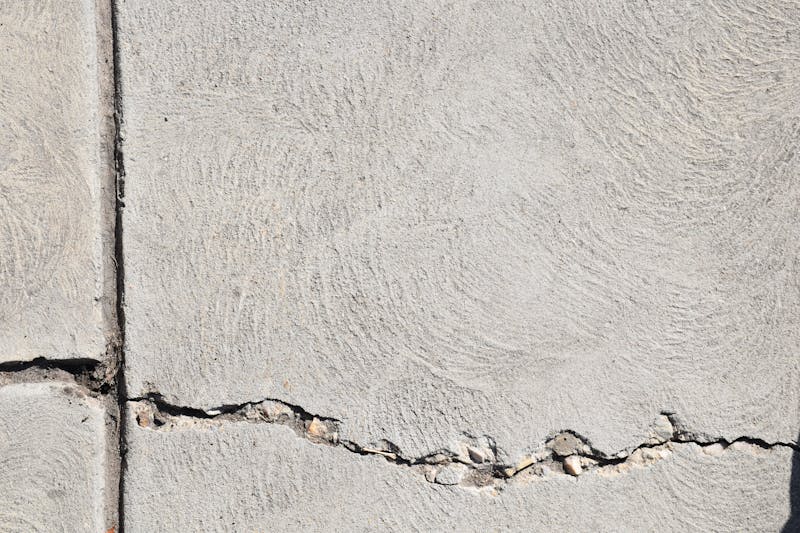
What Foundation Damage Looks Like in El Paso
Foundations in El Paso move. That is the baseline reality of building on this ground. The soils underneath most of the city contain montmorillonite clay, which swells when it absorbs moisture and contracts when it dries out, and it does both with enough force to crack a reinforced concrete slab. Pair that with 300-plus days of sun, summer highs that regularly push past 100 degrees, and monsoon rains that arrive on top of bone-dry soil, and you get a place where foundation problems are not a matter of if but when.
A shifting foundation does not affect just the slab. It pulls at door frames, cracks drywall, binds windows, stresses plumbing lines, and slowly distorts the geometry of the whole structure. Properties across El Paso deal with this, from older neighborhoods near downtown to newer subdivisions on the east side, and the causes are nearly always traceable to what the soil is doing.
Recognizing the Signs
Foundation problems tend to announce themselves in a fairly predictable pattern:
- Diagonal cracks in interior drywall, usually near door frames or window corners
- Stair-step cracks in exterior brick or stucco
- Doors and windows that stick, jam, or refuse to latch
- Gaps opening between walls and ceiling, or walls and floor
- Floors that slope or feel uneven underfoot
- Visible cracks in the garage slab or along the exterior perimeter
A single hairline crack in a wall does not necessarily mean the foundation has failed. But when several of these signs show up together, or when a crack visibly widens over a few weeks, that is worth investigating. Most of the time, by the time someone calls about a sticking door, the foundation has already been moving for a while.
Why This Keeps Happening Here
Two conditions drive most foundation damage in El Paso, and neither of them is going away.
The first is the clay. Montmorillonite clay swells by as much as 15 percent of its volume when saturated and shrinks back as it dries. During monsoon season, the top several feet of soil absorb water and push upward against the slab. During the seven or eight dry months that follow, the clay contracts and pulls away, leaving voids beneath the concrete. That cycle of expansion and contraction generates lateral and vertical pressure that a 4-to-6-inch residential slab was never designed to resist indefinitely.
The second is differential moisture. When rain finally arrives after a long dry stretch, water penetrates the soil unevenly. The south side of a house might be saturated while the north side, shaded and sheltered, stays dry. One section of the foundation lifts while another stays put. That differential is what cracks slabs and shifts structures. Irrigation overspray near the foundation creates the same problem in miniature, and it is surprisingly common.
Repair Methods
The appropriate fix depends on what the foundation is doing, how far it has moved, and what the soil looks like at that particular property. There is no single method that fits every situation.
Steel Push Piers
Push piers are driven through the foundation footing down to load-bearing strata, typically bedrock or a stable soil layer 15 to 30 feet below the active clay zone. Hydraulic equipment then lifts the foundation back toward its original position. Push piers are the standard approach for homes that have settled significantly and need permanent stabilization. Installation takes two to five days for most residential jobs, depending on the number of piers and how accessible the perimeter is.
Helical Piers
Helical piers are screwed into the ground rather than driven. The helical plates along the shaft provide anchoring capacity in soils where push piers may not develop enough resistance. They work well for lighter structures, additions, and situations where the load-bearing stratum sits at a moderate depth, roughly 10 to 20 feet.
Slab Jacking and Foam Injection
For foundations that have settled but do not require deep pier support, concrete leveling through mudjacking or polyurethane foam injection can raise the slab back to grade. Mudjacking pumps a cement-and-soil slurry beneath the concrete. Foam injection uses expanding polyurethane that fills voids and lifts the slab, cures in minutes, and weighs considerably less. Both methods work, but foam is faster and less invasive. The choice usually comes down to cost and the specifics of the site.
Epoxy and Polyurethane Crack Injection
Foundation cracks that have not caused structural displacement can often be addressed through injection. Epoxy bonds the crack faces together and restores load transfer across the break. Polyurethane injection is better for cracks that are actively leaking water. Both seal from the inside out and prevent moisture from reaching the subgrade through the crack, which is how minor cracks become major problems.
Drainage Correction
Sometimes the foundation itself is structurally sound, but poor drainage keeps destabilizing the soil around it. French drains, surface grading adjustments, and downspout rerouting redirect water away from the perimeter. In El Paso, even a sprinkler head that overshoots onto the foundation by a few inches can create enough localized swelling to cause movement. This is one of the most overlooked and least expensive problems to correct.
Slab Foundations vs. Pier-and-Beam
Most El Paso homes sit on concrete slab foundations, a single reinforced pour directly on the ground. Slab foundations perform well when soil conditions are managed, but when the soil moves, the entire structure responds because there is no crawl space to absorb or distribute the shifting.
Pier-and-beam foundations, less common here but present in some older properties, rest on piers with a crawl space beneath the structure. They allow for more adjustment, but the piers themselves can shift in expansive soil, and moisture in the crawl space introduces separate problems.
Repair strategies differ for each type. General concrete repair addresses surface-level damage, but structural foundation work requires understanding which system is in place and how it is interacting with the soil beneath it.
What Foundation Repair Costs
Foundation repair in El Paso typically falls between $5,000 and $15,000 for residential properties. The range is wide because the variables are wide.
Minor crack injection for non-structural cracks might run $300 to $800. A full pier installation around a perimeter foundation, with 15 to 20 piers at $1,000 to $1,500 each, lands at the upper end or beyond. Most residential projects settle somewhere in the middle, around $7,000 to $12,000.
The factors that move the number:
- Number of piers or injection points required
- Depth to stable soil (deeper means more material and labor)
- Accessibility around the foundation perimeter
- Whether interior slab sections need to be addressed
- Any drainage corrections included in the scope
A professional inspection determines the actual scope. Reputable contractors provide written estimates that specify what work is proposed and why it is recommended, not just a number on a page.
Insurance and Warranty Considerations
Homeowner’s insurance in Texas typically does not cover foundation repair caused by settling, soil movement, or normal wear. That covers most foundation problems. However, foundation damage caused by a plumbing leak beneath the slab is often covered, since the damage originates from a covered peril rather than earth movement.
If you suspect a plumbing leak is contributing to foundation problems, have both a plumber and a foundation specialist evaluate the property before filing anything. Documenting the cause accurately matters for claims, and the distinction between “the soil moved” and “a leaking pipe made the soil move” can be worth tens of thousands of dollars.
Most professional foundation repairs come with transferable warranties, typically 10 years to lifetime depending on the method. That warranty can be a meaningful factor if you plan to sell the property.
The Case for Acting Early
Foundation problems do not stabilize on their own. The soil conditions in El Paso will not improve without intervention, and seasonal cycles will continue applying the same forces that caused the damage in the first place. A crack that costs $500 to inject today can become a $12,000 pier job in two or three years if water gets in and the soil beneath keeps cycling.
Most reputable foundation contractors offer free inspections. There is no reason not to find out what is happening, and some comfort in knowing either way.
Request a free foundation inspection to find out where your property stands.
Frequently Asked Questions
What are the signs of foundation problems in El Paso homes?
Diagonal cracks in drywall, sticking doors and windows, gaps between walls and ceilings, uneven floors, and visible cracks in the slab are the most common indicators. Any one of these can have other explanations, but when several appear together, foundation movement is the likely cause.
How much does foundation repair cost in El Paso?
Most residential foundation repairs fall between $5,000 and $15,000. Minor crack injection runs a few hundred dollars. Full pier installation with 15 to 20 piers can reach $15,000 or more. The actual cost depends on the number of piers, the depth to stable soil, and how much of the foundation needs treatment. A professional inspection provides an accurate scope.
What causes foundation damage in El Paso?
Expansive montmorillonite clay and the region’s drought-to-rain cycles are the primary drivers. The clay swells when wet and contracts when dry, generating pressure that cracks and shifts concrete slabs. Differential moisture, where one area of soil is saturated while an adjacent area remains dry, is what causes the most damaging movement.
How long does foundation repair take?
Most residential pier installations take two to five days depending on the number of piers and site conditions. Crack injection is typically finished in a single day. Foam leveling takes a few hours. The timeline depends on what the inspection reveals.
Does homeowner’s insurance cover foundation repair?
Standard Texas homeowner’s policies generally do not cover foundation repair from earth movement or settling. However, damage caused by plumbing leaks beneath the slab is often covered since the leak is the covered peril. Having both a plumber and foundation specialist evaluate the situation helps establish the cause for any insurance claim.